
Solution for: CBT GT Reading Test 13: Morpeth
Answer Table
1.1821
2.THE HUNTER RIVER|HUNTER RIVER|THE HUNTER|HUNTER
3.1870
4.A|C
5.B
6.A
7.D
8.I
9.G
10.K
11.J
12.E
13.H
14.F
15.FREE
16.LECTURE
17.9
18.TUTORIAL
19.COURSE B|STATISTICS FOR MARKETING|BRIDGING COURSE IN STATISTICS FOR MARKETING
20.WORKSHOPS
21.$15|15
22.WORKSHOPS
23.D
24.A
25.N
26.C
27.B
28.YES
29.NO
30.NOT GIVEN
31.YES
32.YES
33.YES
34.NO
35.C
36.J
37.I
38.F
39.H
40.B
Exam Review
Section 1 - Questions 1-14
Questions 1-3: Answer using information from the Morpeth description.
Questions 4-7: Match the accommodation advertisements A-D.
Questions 8-14: Match the numbered locations on the Morpeth Heritage Walk map.
Morpeth
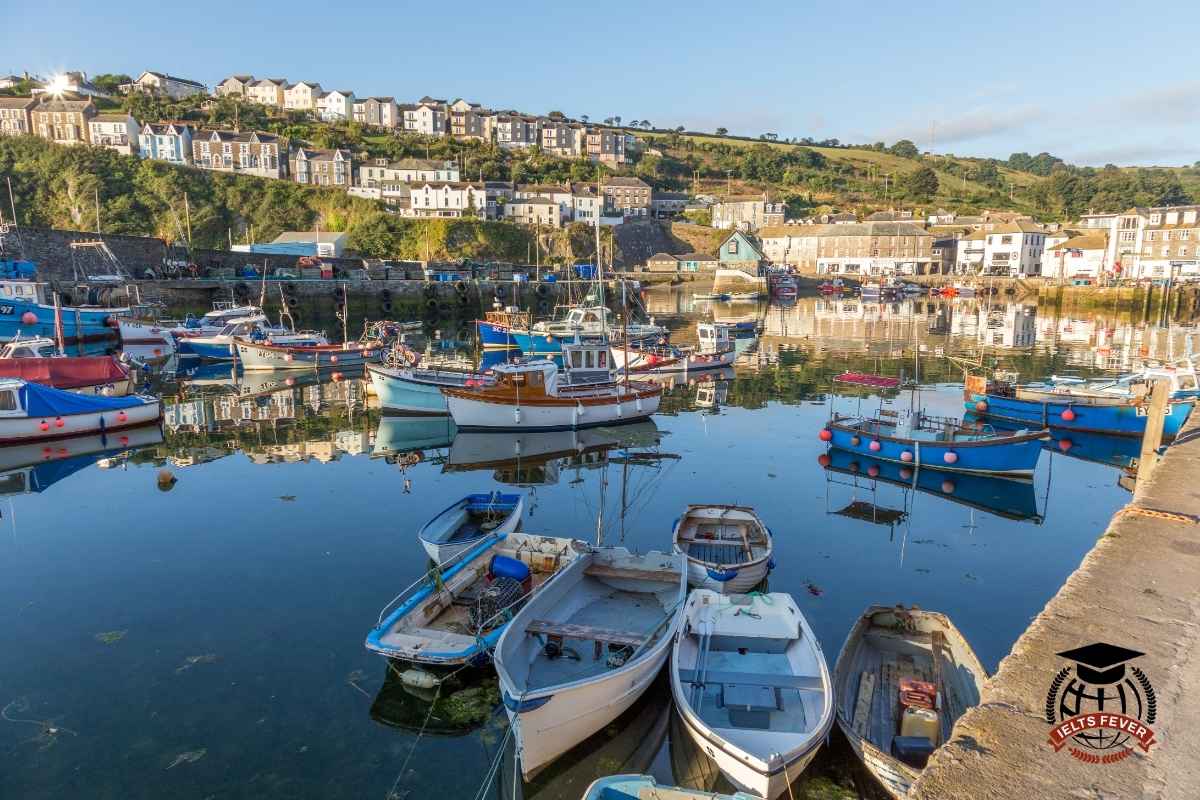
Morpeth is today a small town about two hours' drive north of Sydney. The town of Morpeth grew from an original 2000 acres of land given to an English army officer, Lieutenant Edward Close (1790-1866), in 1821. During the 1830s and 1840s Morpeth became a major river port, due to its favourable location. Produce, hides and timber were brought to Morpeth from inland New South Wales and shipped down the Hunter river to the coast and then to Sydney. However, in 1870 a railway line reached the town, and the importance of river shipping began to decline. Today, Morpeth, with its beautiful old buildings, is a popular tourist destination.
Where to Stay near Morpeth
A — Country Comfort Inn, Hunter Valley
A beautifully restored 125-year-old building just 20 minutes from the vineyards. The Inn is set on 10 acres of landscaped gardens complete with pool, sauna, tennis court, spa, gym, billiard room, guest lounge, fireplace, cocktail bar, and two restaurants. Special packages available. New England Highway, Maitland. Call toll free 1800 065 064 or (049) 32 52 88.
B — Siesta Motel
“Spend a night — not a fortune.” The Siesta Motel, rated 3-star, is conveniently placed at the gateway to the winery district and nearby to the historic towns of Morpeth and Wollombi. A free light breakfast is delivered to your suite and excellent meals are available at the Maitland City Bowling Club next door. Quality of accommodation is assured and the tariff is the lowest in the district.
C — Endeavour East Maitland Motel
28 modern, comfortable 3-star units which open onto the swimming pool and barbeque area. All units feature TV and videos, airconditioning, 2 with spas. Fully licensed restaurant with cocktail bar and lounge is open 7 nights.
D — Eskdale Country Cottages
Rustic cottages secluded amongst gum trees provide quietness and privacy on 200 acres. Each cottage is completely self-contained having 2 bedrooms, full kitchen facilities, and sitting rooms with TV and video, and offers comfortable rural accommodation.
Morpeth Heritage Walk
The best way to see Morpeth is to take the Morpeth Heritage Walk. This covers about three kilometres, and takes visitors past many beautiful historical buildings. Starting at Fig Tree Hill, which has picnic facilities, stroll past the Surgeon's Cottage, built in 1845, formerly home of the local doctor, now shops. From there you will come to Morpeth Bridge, erected in 1870, which replaced a ferry boat. Opposite it on the right is the Courthouse, still in use today. Continue your walk past the historic Railway Station, then turn into George Street. Stroll past gracious houses until you come to the Church of the Immaculate Conception on your right, built of bricks made in Gosford. Continuing up George Street, you come to the shopping district; browse through the shops or stop for refreshment. Your tour of Morpeth will finish at magnificent Closebourne House, built in 1826 by Lieutenant Edward Close.
1
Short Answer
1. When was Lieutenant Close given the land on which Morpeth grew?
Answer: 1821
Explanation: The passage says Lieutenant Edward Close was given the original 2000 acres of land in 1821.
2
Short Answer
2. On what river is Morpeth situated?
Answer: THE HUNTER RIVER|HUNTER RIVER|THE HUNTER|HUNTER
Explanation: The passage says produce was shipped down the Hunter River from Morpeth to the coast.
3
Short Answer
3. When did trains first get to Morpeth?
Answer: 1870
Explanation: The passage states that a railway line reached the town in 1870.
4
IELTS A/B/C Choice Style
Question 4. 4. Which TWO places to stay have restaurants?
Answer: A|C
Explanation: Country Comfort Inn has two restaurants, while Endeavour East Maitland Motel has a fully licensed restaurant. Therefore A and C are both correct.
5
IELTS Box Matching A-H
5. Which place claims to offer the cheapest rate?
- A Country Comfort Inn, Hunter Valley
- B Siesta Motel
- C Endeavour East Maitland Motel
- D Eskdale Country Cottages
Answer: B
Explanation: The Siesta Motel says its tariff is 'the lowest in the district.'
6
IELTS Box Matching A-H
6. For more information, to which place can you telephone free of charge?
- A Country Comfort Inn, Hunter Valley
- B Siesta Motel
- C Endeavour East Maitland Motel
- D Eskdale Country Cottages
Answer: A
Explanation: Country Comfort Inn lists a toll-free telephone number: 1800 065 064.
7
IELTS Box Matching A-H
7. At which place can the guests cook their own food?
- A Country Comfort Inn, Hunter Valley
- B Siesta Motel
- C Endeavour East Maitland Motel
- D Eskdale Country Cottages
Answer: D
Explanation: Eskdale Country Cottages are self-contained and have full kitchen facilities.
8
IELTS Box Matching A-H
8. Map location 2
- A Fig Tree Hill
- B Ferry Boat
- C George Street
- D Gosford
- E Church of the Immaculate Conception
- F Closebourne House
- G Morpeth Bridge
- H shopping district
- I Surgeon's Cottage
- J Railway Station
- K Courthouse
Answer: I
Explanation: Following the Heritage Walk from Fig Tree Hill, the first named building is the Surgeon's Cottage, which corresponds to map location 2.
9
IELTS Box Matching A-H
9. Map location 3
- A Fig Tree Hill
- B Ferry Boat
- C George Street
- D Gosford
- E Church of the Immaculate Conception
- F Closebourne House
- G Morpeth Bridge
- H shopping district
- I Surgeon's Cottage
- J Railway Station
- K Courthouse
Answer: G
Explanation: After the Surgeon's Cottage, the route reaches Morpeth Bridge, matching map location 3.
10
IELTS Box Matching A-H
10. Map location 4
- A Fig Tree Hill
- B Ferry Boat
- C George Street
- D Gosford
- E Church of the Immaculate Conception
- F Closebourne House
- G Morpeth Bridge
- H shopping district
- I Surgeon's Cottage
- J Railway Station
- K Courthouse
Answer: K
Explanation: The Courthouse is opposite Morpeth Bridge on the right, matching map location 4.
11
IELTS Box Matching A-H
11. Map location 5
- A Fig Tree Hill
- B Ferry Boat
- C George Street
- D Gosford
- E Church of the Immaculate Conception
- F Closebourne House
- G Morpeth Bridge
- H shopping district
- I Surgeon's Cottage
- J Railway Station
- K Courthouse
Answer: J
Explanation: The route continues past the historic Railway Station, which corresponds to map location 5.
12
IELTS Box Matching A-H
12. Map location 6
- A Fig Tree Hill
- B Ferry Boat
- C George Street
- D Gosford
- E Church of the Immaculate Conception
- F Closebourne House
- G Morpeth Bridge
- H shopping district
- I Surgeon's Cottage
- J Railway Station
- K Courthouse
Answer: E
Explanation: After turning into George Street, walkers reach the Church of the Immaculate Conception, matching map location 6.
13
IELTS Box Matching A-H
13. Map location 7
- A Fig Tree Hill
- B Ferry Boat
- C George Street
- D Gosford
- E Church of the Immaculate Conception
- F Closebourne House
- G Morpeth Bridge
- H shopping district
- I Surgeon's Cottage
- J Railway Station
- K Courthouse
Answer: H
Explanation: Continuing up George Street leads to the shopping district, which corresponds to map location 7.
14
IELTS Box Matching A-H
14. Map location 8
- A Fig Tree Hill
- B Ferry Boat
- C George Street
- D Gosford
- E Church of the Immaculate Conception
- F Closebourne House
- G Morpeth Bridge
- H shopping district
- I Surgeon's Cottage
- J Railway Station
- K Courthouse
Answer: F
Explanation: The tour finishes at Closebourne House, which therefore matches the last mapped attraction, number 8.
Section 2 - Questions 15-27
Questions 15-22: Complete the Numeracy Centre course chart.
Questions 23-27: Match each student with Course A-D, or N if no course is suitable.
Numeracy Centre
Many business and marketing courses require a knowledge of introductory statistics, computing or mathematics. If you feel inadequately prepared for your course, you can get help from the Numeracy Centre, which offers FREE elementary help in maths and statistics. Grab a timetable from the Centre and drop in when it suits you.
COURSE A — Revision Course in Basic Maths
This 3-hour lecture will review mathematical concepts necessary for elementary statistics, such as fractions, area and percentages up to a Year 8 level of mathematics. It is not necessary to book, so feel free to drop in. This session is FREE!
COURSE B — Bridging Course in Statistics for Marketing
This three-day course introduces ideas in elementary statistics to provide a starting point for further developments in statistical skills later on in other courses. The course is run in sessions of three hours, in the form of a one-hour lecture followed by a two-hour tutorial. Tutorials will be interactive where possible, with hands-on experience of data manipulation using MINITAB on a bank of PCs.
COURSE C — Statistics for the Practitioner
The previous course must be completed before this course. It is largely non-mathematical and concentrates on the interpretation and application of statistics rather than computation. The statistical package MINITAB will be used as a teaching tool. This course is conducted over two days in the form of workshops and small group discussions.
COURSE D — English for Computer Studies
Students with English as their second language who will be needing elementary computing for their courses are encouraged to enrol in this 8-hour course. Students will learn through workshops giving hands-on experience. The cost is $15, including notes and refreshments.
15
Short Answer
15. Course A — Cost
Answer: FREE
Explanation: Course A is explicitly described as free.
16
Short Answer
16. Course A — Teaching method
Answer: LECTURE
Explanation: Course A is a 3-hour lecture.
17
Short Answer
17. Course B — Number of hours
Answer: 9
Explanation: Course B lasts three days, with three hours of teaching each day, for a total of 9 hours.
18
Short Answer
18. Course B — Teaching method after the lecture
Answer: TUTORIAL
Explanation: Each Course B session consists of a one-hour lecture followed by a two-hour tutorial.
19
Short Answer
19. Course C — Name of previous studies required
Answer: COURSE B|STATISTICS FOR MARKETING|BRIDGING COURSE IN STATISTICS FOR MARKETING
Explanation: Course C says the previous course must be completed first. The previous course is Course B, the Bridging Course in Statistics for Marketing.
20
Short Answer
20. Course C — Teaching method
Answer: WORKSHOPS
Explanation: Course C is conducted in the form of workshops and small group discussions.
21
Short Answer
21. Course D — Cost
Answer: $15|15
Explanation: Course D costs $15, including notes and refreshments.
22
Short Answer
22. Course D — Teaching method
Answer: WORKSHOPS
Explanation: Course D says students learn through workshops that give hands-on experience.
23
IELTS Box Matching A-H
23. Narelle, from Taiwan, has to use a computer to do assignments in her business studies classes.
- A Course A — Revision Course in Basic Maths
- B Course B — Bridging Course in Statistics for Marketing
- C Course C — Statistics for the Practitioner
- D Course D — English for Computer Studies
- N No suitable course
Answer: D
Explanation: Course D is designed for students with English as a second language who need elementary computing for their courses.
24
IELTS Box Matching A-H
24. Joe, who left high school 10 years ago, wants to brush up on his maths before he starts his studies for the year.
- A Course A — Revision Course in Basic Maths
- B Course B — Bridging Course in Statistics for Marketing
- C Course C — Statistics for the Practitioner
- D Course D — English for Computer Studies
- N No suitable course
Answer: A
Explanation: Course A is a revision course in basic mathematics and is suitable for someone who wants to refresh basic maths.
25
IELTS Box Matching A-H
25. Jenny needs an advanced course on computer graphics for her studies in Graphic Design.
- A Course A — Revision Course in Basic Maths
- B Course B — Bridging Course in Statistics for Marketing
- C Course C — Statistics for the Practitioner
- D Course D — English for Computer Studies
- N No suitable course
Answer: N
Explanation: None of the four courses teaches advanced computer graphics, so no suitable course is available.
26
IELTS Box Matching A-H
26. Geoff, who has to read many articles containing statistics, needs to know how to interpret and apply the facts and figures.
- A Course A — Revision Course in Basic Maths
- B Course B — Bridging Course in Statistics for Marketing
- C Course C — Statistics for the Practitioner
- D Course D — English for Computer Studies
- N No suitable course
Answer: C
Explanation: Course C focuses on the interpretation and application of statistics rather than computation.
27
IELTS Box Matching A-H
27. Bob needs to know how to perform some of the basic statistic equations for the assignments in his business course.
- A Course A — Revision Course in Basic Maths
- B Course B — Bridging Course in Statistics for Marketing
- C Course C — Statistics for the Practitioner
- D Course D — English for Computer Studies
- N No suitable course
Answer: B
Explanation: Course B introduces elementary statistics and develops the basic statistical skills needed for later coursework.
Section 3 - Questions 28-40
Questions 28-34: Write YES, NO or NOT GIVEN.
Questions 35-40: Complete the business-planning flow chart by choosing A-J.
Business Planning
What is a Business plan?
It is probably best described as a summary and evaluation of your business idea, in writing.
Preparation of a business plan is the first and most important task for the business starter. The plan should include details concerning the industry in which you operate, your product or service, marketing, production, personnel and financial strategies.
What purpose does it serve?
A business plan allows you to think through all the factors of a business, and to solve potential problems before you come to them. It will identify strengths and weaknesses and help to assess whether the business can succeed. It is a blueprint for starting, maintaining or expanding a business. It is a working plan to use in comparing your achievements to the goals you set. It should provide information required by financial institutions when finance is sought.
How to produce a Business plan
Step 1: Collect Information
Gather as much relevant information as possible concerning the industry in which you intend to operate. Collect all possible information regarding the markets you are aiming for and learn all you can about the products or services you intend to produce, distribute or offer.
Step 2: Analysis
Read over the material you have collected and decide what is relevant to your business idea. You may have to modify your idea depending on what your research shows. The key question to ask is: “Can you design a business that will earn enough to cover costs and pay a wage and reasonable profit to you as proprietor?”
Step 3: Strategy Formulation
Decide how the business will operate. Describe how it will be managed, the staff and organisational structure, and areas of responsibility for each staff member, especially family members.
A comprehensive business plan also includes a Marketing plan, an Operational plan and a Financial plan. The financial plan includes a cash-flow forecast, balance sheet, profit and loss statement, sources of finance, and sales forecast and target.
Do not forget set-up costs and the money needed to see you through an initial period of low cash flow when calculating your first year's budget.
Update your Business plan
Nothing remains constant in business; circumstances, markets, fashions and methods change. From time to time you must reassess your business plan. A business plan should be thought of as flexible, not fixed.
28
Yes / No / Not Given
28. A business plan must be written down.
Answer: YES
Explanation: The passage describes a business plan as a summary and evaluation of the business idea 'in writing,' so the statement agrees with the writer.
29
Yes / No / Not Given
29. Creating a business plan is only necessary for a new business.
Answer: NO
Explanation: The passage says a business plan is a blueprint for starting, maintaining or expanding a business, so it is not only for new businesses.
30
Yes / No / Not Given
30. A business plan should include a diagram of your proposed office or shop layout.
Answer: NOT GIVEN
Explanation: The passage says diagrams may be useful for showing management, staff and organisational structure, but it does not state that a diagram of an office or shop layout should be included.
31
Yes / No / Not Given
31. A business should generate enough money to pay salaries, and some profit to the owner.
Answer: YES
Explanation: The key question in Step 2 asks whether the business can earn enough to cover costs and pay a wage and reasonable profit to the proprietor.
32
Yes / No / Not Given
32. The roles of family members in the business must be clearly defined in the business plan.
Answer: YES
Explanation: Step 3 says areas of responsibility for each staff member should be included and that this is especially important for family members.
33
Yes / No / Not Given
33. You should expect not to earn much money in the first year.
Answer: YES
Explanation: The financial advice warns that the first-year budget must allow for an initial period of low cash flow, supporting the idea that earnings may initially be limited.
34
Yes / No / Not Given
34. Once a business plan is finished, no further changes will need to be made to it.
Answer: NO
Explanation: The passage explicitly says the business plan should be reassessed and treated as flexible rather than fixed.
35
IELTS Box Matching A-H
35. First step in the flow chart
- A Advertising
- B Keep your business up-to-date
- C Find information
- D Create a sample product
- E Find a good location
- F Organisational structure
- G Can I find good staff?
- H Operations
- I Create your business plan
- J Can my business make enough money?
Answer: C
Explanation: The first stage is to collect or find information from sources such as books, industry associations and other people.
36
IELTS Box Matching A-H
36. Key question during the analysis stage
- A Advertising
- B Keep your business up-to-date
- C Find information
- D Create a sample product
- E Find a good location
- F Organisational structure
- G Can I find good staff?
- H Operations
- I Create your business plan
- J Can my business make enough money?
Answer: J
Explanation: The passage identifies the key question as whether the business can earn enough money to cover costs and provide wages and profit.
37
IELTS Box Matching A-H
37. Step after analysis
- A Advertising
- B Keep your business up-to-date
- C Find information
- D Create a sample product
- E Find a good location
- F Organisational structure
- G Can I find good staff?
- H Operations
- I Create your business plan
- J Can my business make enough money?
Answer: I
Explanation: After collecting and analysing information, the passage says you are ready to commit the plan to paper — that is, create your business plan.
38
IELTS Box Matching A-H
38. One area to describe in the business plan
- A Advertising
- B Keep your business up-to-date
- C Find information
- D Create a sample product
- E Find a good location
- F Organisational structure
- G Can I find good staff?
- H Operations
- I Create your business plan
- J Can my business make enough money?
Answer: F
Explanation: Step 3 specifically says the plan should describe staff and organisational structure.
39
IELTS Box Matching A-H
39. Another area to describe in the business plan
- A Advertising
- B Keep your business up-to-date
- C Find information
- D Create a sample product
- E Find a good location
- F Organisational structure
- G Can I find good staff?
- H Operations
- I Create your business plan
- J Can my business make enough money?
Answer: H
Explanation: The passage lists an Operational plan among the main parts of a comprehensive business plan.
40
IELTS Box Matching A-H
40. Final ongoing step
- A Advertising
- B Keep your business up-to-date
- C Find information
- D Create a sample product
- E Find a good location
- F Organisational structure
- G Can I find good staff?
- H Operations
- I Create your business plan
- J Can my business make enough money?
Answer: B
Explanation: The final section says the plan must be updated and reassessed as circumstances change, so the last step is to keep the business up-to-date.